

Make an appointment today to discover how our expertise in practice branding, patient acquisition, advanced marketing tactics, and patient retention can help you thrive.

Steve Schwartz reveals secrets to successful marketing campaigns and growth strategies for the concierge medical industry, this guide draws from 25 years of digital marketing expertise and experience working with over 900 clients.
Episode Summary
Summary
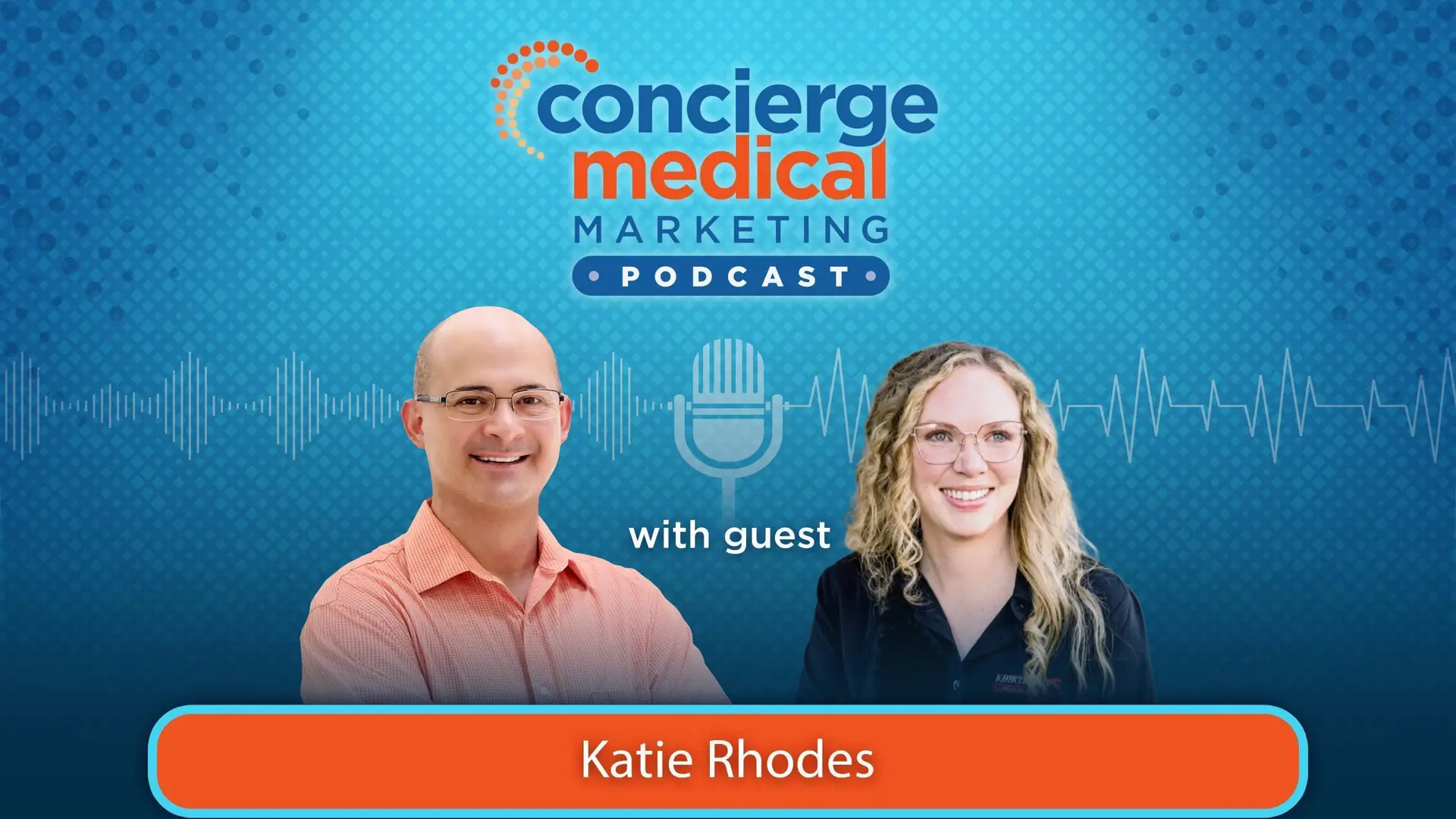
In this episode of the Concierge Medical Marketing Podcast, host Steven Schwartz interviews Katie Rhodes, a financial expert specializing in concierge medical and DPC practices. Katie shares her journey into healthcare finance, the importance of having a CFO or fractional CFO, and common financial mistakes made by medical practices. The conversation delves into the critical distinction between cash flow and profit, tools for financial planning, and the value of ongoing financial analysis. Katie emphasizes the need for physicians to understand their numbers and make informed decisions to ensure the success of their practices.
Episode Chapters
Chapters
00:00 Introduction to Concierge Medical Practices
02:48 Katie’s Journey into Healthcare and Finance
05:13 Common Financial Mistakes in Concierge Medicine
07:42 Understanding Cash Flow vs. Profitability
10:48 The Role of a Fractional CFO
13:26 Tools for Financial Planning and Growth
16:10 Final Thoughts and Resources
Connect with Our Guest
Full Episode Transcript
Hi and welcome to the Concierge Medical Marketing Podcast. I’m your host, Steven Schwartz, and it’s truly my pleasure to have Katie Rhodes of Coal Creek Ledgers as my guest on the podcast today. Katie, thank you for being with us.
Katie Rhodes (00:37)
Thanks so much for inviting me. I really appreciate it.
Steven Schwartz (00:40)
Sure, it’s truly my pleasure. We became acquainted not too long ago and your specialty is helping concierge medical and DPC practices with their bookkeeping, with their finances. In fact, you even act as a CFO or a fractional CFO. Tell us first of all, before we get into all of that, give us a little background of where you came from, know, why.
Why accounting and bookkeeping is interesting to you. Just give us some personal and some background.
Katie Rhodes (01:13)
Sure. Yeah. So a lot of my family is in healthcare and so it kind of seemed like a natural avenue for me to explore for a career. But after doing some of the more direct care aspects, I realized that that really wasn’t where my passion was and I discovered numbers and it just kind of evolved from there. Yeah. So I worked a lot in nursing facilities and then
on a corporate team for a short time training and all of that. And I realized that that life didn’t really fit my lifestyle. And so that’s whenever I left the company and started Coal Creek Ledgers. So we’ve been doing bookkeeping and like you said, newly added some CFO advisory services as well. And it’s been a good fit. I live in Western Colorado and I have a husband and two beautiful kids and life is good here.
Steven Schwartz (02:08)
Nice. Explain Coal Creek.
Katie Rhodes (02:10)
Yeah, so it’s a local, you know, it’s just something in our geographical area and there’s, it’s not too far from my home and there’s actually another coal creek not too far away from us as well. And it’s kind of an area where my husband has hunted before and it just kind of speaks Colorado to me. So it seemed like a fitting name.
Steven Schwartz (02:31)
Well, we love it. It’s always fun having the background on where and how entrepreneurs come up with their business name and the concept and whatnot. So how long have you been helping concierge and DPC providers with their bookkeeping and finances?
Katie Rhodes (02:46)
So we opened our firm a couple years ago and I didn’t actually, before I started, I didn’t actually know about DPC and Concierge, but quickly learned what it was all about. And I kind of went through a traumatic health journey of my own. And whenever I discovered that something like this was available, this sort of model, it was kind of like an aha moment. And it was just like, you know,
If I had known about this, if I could have done this, some of these things that happened to me never would have been. on top of, knew I wanted to stay in healthcare and help in that industry, but after seeing the benefits of this model, I’m just really passionate about helping it succeed and furthering it and being a more, a leading way to receive healthcare in America.
Steven Schwartz (03:34)
love it. We’ve dealt with so many physicians who’ve been burned out of running their practice in the traditional insurance based model where they literally have five minutes to spend with a patient and maybe three to five minutes to dictate their notes into a computer or onto a recording device. And then they’re off to see the next patient and they’re just tired. And by having fewer patients resulting in more time,
the quality of care becomes better. And I’m glad that through Concierge Medicine, you’ve been able to, with your physicians, work out your own personal medical issue. And glad to see that it’s worked very well for you in your particular situation.
Katie Rhodes (04:19)
Yeah, no, it’s like I said, It’s a fantastic model. And so I’m really happy to really specialize and help further their advances in this industry.
Steven Schwartz (04:30)
Awesome. So as you’ve worked with and partnering with different concierge and DPC practices, what is the biggest financial mistake you’ve seen them make and how can they best avoid it going forward?
Katie Rhodes (04:46)
Okay, so a couple things come to mind. The first is that most will have a tax preparer, CPA or EA or whatever, to prepare their taxes and then they have a bookkeeper. And a lot of times they think, okay, I have these two professionals in my corner and now I’m good. So stay with me, because there’s a qualifier here. But unless those roles
have some sort of advisory service that they’re giving to you, it’s not enough because a bookkeeper role is designed to track what’s happened so far in the past in your business. And the CPA’s role is to keep you in compliance with taxes and maybe there’s some tax strategy involved, but like I said, unless they offer some sort of an advisory service, neither of those roles is designed
to help you make future business decisions. So what people end up doing is they’re kind of flying blind on the cashflow and profitability of their business. You’re relying on your gut instinct on whether or not you should hire or leverage alone or the different decisions you have to make day to day to sustainably grow a practice. mean, physicians, obviously you’re incredibly intelligent people, but from what I’ve heard, there’s no
business 101 class that’s a required part of the curriculum. So, you need someone to fill in those gaps. And that’s kind of where the CFO level approach comes into play. It helps you develop a clear financial strategy and help you look forward. You know, it doesn’t need to be a CFO. Like I said, maybe one of your other professionals offers this service already, but…
It’s all about using these numbers for decision making. You need to be able to see what’s working, what’s not, and what to do next. Go ahead.
Steven Schwartz (06:37)
I would say also
having sort of a non-biased extra set of eyeballs on the numbers on the business and therefore also on the strategy for going forward can be very helpful because sometimes as business owners, we’re so locked into running the day to day of our business that we don’t stop and take a look at trends and forecasting and plans and having a different person who is an expert in those
areas come in and say, well, have you ever thought about this or have you ever thought about that? I bet that pays huge dividends for your clients, correct?
Katie Rhodes (07:15)
It is so true. Unless the owner is someone who is completely removed, maybe not completely, but mostly removed from the day to day operations, it’s really hard to shift your mind, zoom out and look at the bigger picture of what’s going on. obviously having a professional is ideal, but like you said, even an external third party person to take a look at things from an unbiased point of view is super helpful.
Another mistake I wanted to point out is that a lot of times there’s a lot of software and analytics going on for memberships, right? You’re measuring, some of the softwares help with this, measuring membership turn, your waiting list, all of these other things, but they don’t always look at the practice holistically. Often membership medicine practices have other things going on.
You’ve got revenue from labs, hormone therapy, longevity programs, and so on. And if you only analyze your profit margin or your profitability on memberships, well, you could have a good profit margin there, but then you’re leaking, you’ve got this leaky bucket on the other side where you’re not being financially efficient and keeping every, you know, all your costs and everything in line. So,
Looking at obviously memberships is your main revenue stream, but looking at your business as a whole to see how your profitability is doing.
Steven Schwartz (08:38)
I love it. One thing I wanted to tag onto, as you said, physicians don’t typically get a class in business finance 101 at their university or their med school and need, many cases need help in that space. One of the things that I do with Concierge Medical Marketing, our company’s marketing arm, is that we provide
workshops, virtual webinar workshops to teach physicians and teams different digital marketing strategies, methods, and whatnot so that they can implement these strategies in their business to help them get more leads, how to convert more leads, how to use automation tools, and how to use AI, and so much more. And so part of what I do is create that content and put it out
on our social media, put it on YouTube and wherever it may be so that the physicians can get that. And obviously, if a practice needs to grow and they’re struggling with something, they can always reach out to me personally. We can set up a time to talk about what they’re struggling with. But I’m glad that you’re able through your fractional CFO position to be able to help forecast and plan and strategize on the financial aspects with your clients. That’s pretty awesome.
Katie Rhodes (10:02)
Yeah.
Steven Schwartz (10:02)
Any final thoughts on that? Yeah, go ahead.
Katie Rhodes (10:02)
And I love that you provide those, ⁓ the workshops. just think it’s, you know, I kind of take that same mind view too, that, you know, We don’t need more gatekeepers in this world. There’s a lot of value we can share and you take it as far as you can until you need that extra help. And like you said, that’s whenever you can reach out to you or I for, for those different aspects of the business. So yeah, totally agree with that.
Steven Schwartz (10:28)
So in cases where you’ve worked with concierge and DPC practices, may see cases where revenue is coming in, business seems to be solid, but the practices are still struggling with cash flow. What’s the disconnect?
Katie Rhodes (10:44)
So this is probably one of the most common things I see in businesses across the board. A lot of people know to look on their income statement, also called like the profit and loss. They know to look at that bottom line number. Is it a positive or a negative? Do I have any net income at the end of the day? And that’s measuring your profitability. But in reality, they don’t have that much cash in the bank. So, you know, you may show a profit on that statement.
but your bank account shows a different story. So a lot of people don’t understand like why that’s happening or where this money is going. So I mean, a lot of times when we meet, when I meet with a client, they’ll say, well, it doesn’t feel like I made that much. I don’t think that number is right. That bottom line doesn’t tell the whole story. So some of the disconnects that could happen to make that disparity,
is it’s all in the cash flow, right? You might have a timing problem. Your expenses are hitting before you’re actually getting the cash for that revenue that you’ve billed out. Or your costs can slowly creep up unnoticed. Delayed payments. You might show on paper that you should be receiving this money, but the cash hasn’t actually hit your bank account yet. I mean, there’s a huge list of reasons why this could be, and it’s…
It’s very specific to each business, but I think a big thing to keep in mind is that profit is not the same as cash flow, and you need to keep an eye on both things to keep your business healthy.
Steven Schwartz (12:12)
So how can a doctor know if their practice is profitable on paper, but it’s struggling in reality? I mean, what should they do next?
Katie Rhodes (12:22)
So to know if you’re in that situation, it kind of goes back to some of the scenarios I just described. If you’re looking at your financials and you’re going, where’s the money? My cash feels tight. Then you have a cashflow problem. So to get to the next part, you need to stop guessing, no more gut instincts, and you need to start measuring things. your cashflow and not just your revenue. Meaning you need to keep track
and have an understanding of when money is coming into your bank account and when it is leaving. That’s a really big key to keeping cash in the bank. I cash flow is the lifeblood of any business. And if you can keep that up, then you can figure out profit and everything else. You want to plan for any disruptors to that cash flow, like membership turn. If you’re a hybrid practice who takes insurance,
We all know there’s delays and claim denials there. Leads, right? Lead generation is a really big thing and you want to know where all that’s coming from. And I think you have a pretty helpful tool for that too. Is that right?
Steven Schwartz (13:25)
I do, yes. If you want to write this down, the address is cmmkg.com /budget – worksheet. Again, cmmkg.com forward slash budget dash worksheet. And if you go there on your computer,
you’re going to see our budget worksheet that’s absolutely free. It’s my gift to you. I use this to help you plan and understand your numbers better. What you can do is open it up on the screen and then save it to your own Gmail or Google Workspace account. Once you’ve saved it locally, then in the orange boxes, you can type in the data relevant to your practice. For example, the first line is, how many membership patients does your practice currently have?
So 50, 100, 150, whatever your number might be. The next line says, how many membership patients would you like to have at the end of this year? And you put in that number. And the system is gonna calculate and say, okay, well, here’s the difference. Here’s the number of patients you still need going forward. And then you also put in how many months are there between now and the end of the year? So put in, know, for February, you put in, know, 11 more months. And.
The system here, this spreadsheet’s gonna tell you how many more membership patients you need to acquire each month and how many leads come in per month and what is your conversion percentage. In other words, do you convert one out of five? That’s 20%. One out of two? That’s 50%, much better. You can also put in the spreadsheet your average annual membership fee per patient.
Right. So if it’s 2000, 3000, 4000, 5000, whatever your magic number is, put it in there and the system’s going to literally break down the numbers for you to tell you if you are going to have enough leads coming in right now to and based on your conversion percentage, if you’re going to be able to grow to the number of membership patients that you had listed earlier up on the spreadsheet. So it’s a lot of great stuff in here.
And The second tab is the marketing budget allocations worksheet where you can literally put in your annual projected revenue, your marketing budget percentage. For instance, 5 % is kind of cruising, but without a lot of growth. 10 % is more aggressive. 15 % is going great guns. It’s going to tell you based on your annual projected revenue and that percentage, how much money you should be investing every month.
Katie Rhodes (15:37)
awesome.
Steven Schwartz (16:05)
on your marketing, not just online marketing, but also offline marketing and repeat business marketing. And the spreadsheet literally tells you what percentage and how much you should be spending on each area of your marketing going forward. And feel free to change the numbers, right? So by doing this, you can literally see the full amount of investment that you should be spending and to achieve your goals. And before I forget,
There’s a third tab that has nothing really to do with leads and goals, but what it is is an annual marketing calendar. And so down the spreadsheet on the left-hand column is January, February, all the way up to December. And then each of the other four or five, five columns give you suggestions for different marketing topics. For example, the first column is pay per click ads. There’s a list of 12 different pay per click ad campaigns that you could run.
The next column is email and blog. So you write a blog on the topic. For January, it might be starting the year healthy, benefits of personalized care. February is Valentine’s Day. So you say fall in love with your health, highlighting benefits of longer appointments and preventative care. The other column is social media, SEO, and also display ads. So take this spreadsheet with my compliments, use it, and hopefully it’ll help you grow your practice.
That’s my gift to you. Before we wrap up here, this has been a great conversation, Katie. Many practices are still kind of small. They have one practitioner, maybe a nurse or two, maybe a front desk person, three or four people, and it’s a small office. They might not really need a full-time CFO, but the concept of a fractional CFO makes sense. Can you talk just a little bit more about that and
How can a physician get CFO level insights without the CFO level price tag?
Katie Rhodes (17:59)
Yeah, of course. So kind of going back to what I said at the beginning, right? I mean, every business needs to know certain things about their numbers. I mean, they need to know what they mean. Of course, right? You need to know what your break even point, how many months of expenses do you have in the bank? You need to be able to track these things, not just once a year, not just once every quarter. You need to keep an eye on these things to keep a healthy business and to keep it growing. So like you said, full time CFOs,
It is probably excessive for most of the practices that are out there right now in this space. Unless you have like 5 million a year in revenue, full-time CFO doesn’t really make sense. But every business still needs financial strategy, every single one, some sort of guidance beyond just getting bookkeeping done for taxes and then getting the taxes done. You need someone looking at how to grow your business. So
I don’t even know if fractional CFO is the best term for what I do because it’s not, it’s kind of a boiled down version. It’s a kind of a three step system to just give you this month over month guidance that’s at a price tag that’s affordable for someone who’s not ready for an actual CFO position employee in their practice. So in this system,
I help you have a clear understanding of your numbers, right? That’s the foundation that you need to get here. And then I provide an ongoing financial analysis to identify like strengths, weaknesses, any risks in your business. And then we work on a plan together, an actionable plan to increase your profit and cashflow. Cashflow is the main focus of what I do. So we figure out
what’s going on in your business, what’s right, what’s wrong, and then what to do about it. What are the next steps we need to do to move the needle and get you in the right direction? So it’s not just a one-time consultation, but it’s a month-over-month process to build that financial clarity and strategize. So we usually start with a right fit call, meaning I want to know
If we’re a good fit to work together, do we like each other? Can I help you? Are you someone that fits what I have to offer? And then can I, you know, really practice what I preach here. Everything that you do in your business needs to bring a return on investment. So that includes me, right? If I can’t help you make at least enough to cover my fee in a year, then I’ll fire myself.
because there’s no point in working together if I can’t help you make more money. So that’s really what it boils down to. I don’t just wanna help you track your money and I don’t just wanna help you have these great analytics on a pretty sheet. And I use a scoreboard to kind of boil it down and make it simple to digest, right? You don’t even have to look at your financial statements if you don’t want to. We’re just gonna give a clear actionable plan on what to do next. So.
what you can do next to put more money in your bank account so that you can do whatever you’re planning to do with your business. Everything everything gets, needs to be fueled by, by the cash in your business. And a lot of people don’t like to talk about it that way, but it’s, you know, it’s, it’s a necessary thing. Do you want time off to go travel with your family? Do you want to hire this amazing rock star employee that you just would love to have?
part of your vision and your practice. All of these things boil down to having the proper cash flow so that you can do what you wanna do with your business.
Steven Schwartz (21:37)
Love it. You’ve got so many insights and I really appreciate you sharing your heart and your ideas with the audience here. If somebody has listened to this and really wants to speak with you and have you look at their numbers, what’s the best way for them to reach out to you?
Katie Rhodes (21:54)
Feel free to email me. My email is just my name, Katie, K-A-T-I-E, @ coalcreekledgers.com. Or if you’d like to schedule a time to meet me face to face on Zoom, I would love to do that too. Just go to consult, C-O-N-S-U-L-T, dot coalcreekledgers.com. And yeah, I’d love to meet you, for sure.
Steven Schwartz (22:18)
Wonderful. And just to clarify, Coal is C-O-A-L, Coal Creek. Some people may think COLE it’s like that doesn’t make sense. So Coal, that’s great. I’m so grateful for what you’re offering. And as I had mentioned before, part of my company is Concierge Medical Marketing is our marketing arm. And we help our clients.
Katie Rhodes (22:23)
Yes, sir.
true. Yeah, that’s right.
Steven Schwartz (22:40)
We’ve noticed three different sort of sections or areas where we can best help concierge physicians and DPC doctors with the struggles or challenges they’re facing. So the first that we offer is called transition. This is for a office that may have had an existing practice, maybe 2000, 3000 or more existing patients, and they need help transitioning some of those patients to the DPC model. So we can help with transition.
The second is growth. As we’ve talked about, if you have 10 or 20 or 50 or 100 existing membership patients and you’ve got a panel number that’s higher, you want to grow. And there’s different digital marketing techniques and strategies available to help achieve that. And the third and final is nurture. Now this is for practices that are already full. They’ve reached their panel size and perhaps even have a waiting list. But it’s really important
that your patients are continually nurtured, whether that’s email or text messages or digital display ads, or even get together once a quarter for, as I say, wine and cheese parties, where you get to spend time with the doctor and meet some of the other patients and really just have a nice time learning about something new and getting face time. The idea is that we want our patients to feel great about their investment in your practice so that every year when it’s time,
they renew. So these are the three different programs that we offer at Concierge Medical Marketing. And I’ve written a book called The Definitive Guide to Winning with Digital Marketing for Concierge Medical Practices. This book is available for free from our website conciergemd.marketing. Please go to the homepage, scroll down the page till you see the little box that talks about having a free book. Just put in your email address, click the go button.
and our system will send you an email where you can click and download the PDF to your computer. Please read this book with my compliments. There’s tons and tons of great information in there. Very actionable, easy to read. But here’s the thing. If you struggle, if you’re frustrated, if you can’t follow the details or, you know, I don’t want you pulling out your hair and, you know, ending up looking like me here. If you need help, please feel free to reach out to us so that I can.
Katie Rhodes (24:56)
Thank
Steven Schwartz (25:01)
do a deep dive into your situation and give you some pointers and strategies on what you may want to implement yourself. Or if you need our help to do that, we can certainly talk about that as well. If you’d like to do a quick 15 minute call with me, no charge, happy to chat. The link is cmmkg.com / schedule. Very simple to pick out a time and date that works on my calendar as well as yours. Fill out the form and we’ll hop on a call and see what we can do to help you.
Other than that, Katie Rhodes, Coal Creek Ledgers. It has been my pleasure having you on the podcast today. I wish you all the very, best in your business and thank you for what you’re doing to help these doctors succeed and elevate the healthcare for the patients all around our country.
Katie Rhodes (25:39)
Thank you.
Likewise, yes, thank you so much for having me.
Steven Schwartz (25:47)
My pleasure. We’ll talk to you soon. And before I forget, you have provided us with a great document that gives information about you and your business and what you offer and all that. I’m going to post that document on our website on the page where this blog will appear. So if anybody’s listening to this and want to get that document, just pull it off of our website and it’s yours for the taking. OK.
Katie Rhodes (26:11)
And I had one more thing to that. I don’t, I’m working on it. If you would like to, I don’t have an automated opt-in right now, but if you’d like to get added to my email list, I’m working on a free handout that talks about the 16 drivers of the financial side of your business. And it just kind of goes into depth on what you need to do to leverage each of those. So if you want that, please shoot me an email.
Steven Schwartz (26:13)
sure, go ahead.
Katie Rhodes (26:37)
and I will make sure that you get that when it comes out.
Steven Schwartz (26:41)
Wonderful. And again, give us your email one more time.
Katie Rhodes (26:43)
It’s Katie, K-A-T-I-E @ coalcreekledgers.com. And again, that is C-O-A-L C-R-E-E-K L-E-D-G-E-R-S.com.
Steven Schwartz (26:52)
Perfect. Wonderful. Again, Katie, it’s been my pleasure having you on the podcast. I wish you all the very, very best and we’ll definitely keep an eye on you as your business and your career keeps growing and you help a lot of doctors be successful in their businesses.
Katie Rhodes (27:05)
Thank you so much.
Steven Schwartz (27:06)
Yeah, it’s my pleasure. This has been Steve Schwartz with the Concierge Medical Marketing Podcast and we’ll see you next time. Bye everybody.