
Make an appointment today to discover how our expertise in practice branding, patient acquisition, advanced marketing tactics, and patient retention can help you thrive.

Steve Schwartz reveals secrets to successful marketing campaigns and growth strategies for the concierge medical industry, this guide draws from 25 years of digital marketing expertise and experience working with over 900 clients.
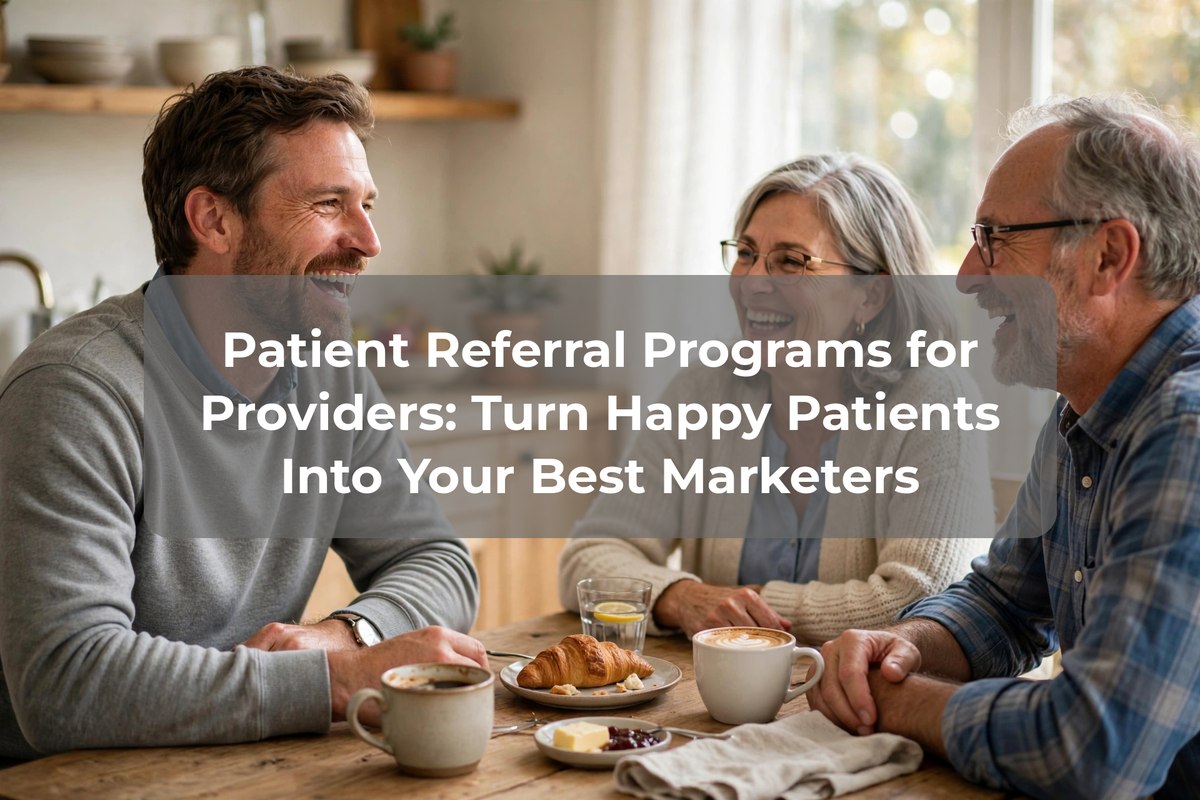
Ask any successful concierge doctor where their best patients come from, and you’ll hear the same answer: other patients. Not Google ads. Not Facebook. A trusted friend saying “you have to call my doctor.”
That trust transfer is everything when you’re asking someone to pay $2,000 to $5,000+ per year for membership. No ad can replicate it. A patient referral program for doctors doesn’t manufacture word of mouth. It systematizes the word of mouth that’s already happening and makes sure none of it slips through the cracks.
Why Referrals Outperform Every Other Channel
Referred patients arrive pre-sold. Someone they trust already validated the cost, the experience, and the outcome. They close faster, negotiate less, stay longer, and refer others in turn. In lifetime value terms, one referred concierge patient is worth several patients acquired through paid ads.
There’s a compounding effect most practices miss. Every delighted patient is a potential source of two or three more. Without a system, you get whatever referrals happen by accident. With a system, you get a predictable pipeline that grows on its own. That’s the difference between hoping for growth and engineering it.
When to Ask: Borrow the Review Playbook
The best moment to ask for a referral is the same as the best moment to ask for a Google review: at peak satisfaction, right after a great visit, before the patient leaves your building. The emotion that makes someone write a five-star review is the same emotion that makes them tell a friend.
Train your front desk to pair the two asks. After the review ask lands, one more line: “And if you know anyone who’s frustrated with their current doctor, we’d love an introduction. Just have them mention your name when they call.” Natural, unpressured, and it takes ten seconds.
Don’t limit asking to checkout. The annual wellness visit, the follow-up where test results came back great, the moment a patient says “I feel better than I have in years” — those are all referral moments. Teach your team to recognize them.
What to Offer (and What to Avoid)
Here’s where well-meaning programs go wrong. A patient referral program doesn’t need a big bounty to work. In fact, large cash rewards can cheapen the gesture and create the wrong motivation. Most patients refer because they genuinely want to help a friend, not because they’re earning $200.
What works: a sincere thank-you, recognition, and a modest token of appreciation. A handwritten note from the doctor. A small gift card. A credit toward their membership renewal. Keep it warm, not transactional.
What to avoid: cash-per-head bounties, especially anything that looks like paying for patients. Federal anti-kickback rules can come into play when federal healthcare program beneficiaries are involved, and state laws vary widely. Keep incentives modest, never tie them to the referred patient enrolling or paying, and have a healthcare attorney review your program before you launch it. This is one area where “everyone does it” is not a legal strategy.
Make Every Referral Trackable
A referral program you can’t measure is a wish, not a program. You need to know who referred whom, how many referrals each patient sends, and which ones convert.
Start simple. Add “how did you hear about us” to your intake with a field for the referring patient’s name. Give patients a simple way to make the introduction: a referral card with a QR code linking to your scheduling page, or a “share” link they can text to a friend. Tag referred leads in your CRM so you can track them separately from ad leads.
Review the numbers quarterly. Which patients refer the most? What do your top referrers have in common? How do referred patients compare on retention and lifetime value? The answers tell you where to focus your appreciation efforts.
Close the Loop With the Referrer
The step almost every practice skips: thanking the referrer and telling them what happened. When someone sends you a friend, they want to know it mattered.
A quick personal thank-you goes a long way. A note, a call, a mention at their next visit: “Thank you for sending Sarah our way.” That’s it. Don’t share details about the friend’s care or enrollment status. A general thank-you respects everyone’s privacy and still makes the referrer feel valued.
Then recognize your champions. Patients who refer repeatedly are your unofficial marketing team. An annual appreciation gesture, early access to a new service, or a simple holiday card from the doctor keeps them engaged. People repeat behavior that gets recognized.
What Not to Do
Don’t pressure your staff with referral quotas. Quotas produce awkward asks, fake referrals, and resentful employees. The ask should feel like a natural extension of great care, not a sales target.
Don’t make the program complicated. If patients need a portal login, a multi-step form, and a tracking number to refer a friend, they won’t. A name mentioned at scheduling beats a sophisticated platform nobody uses.
Don’t forget HIPAA. Never confirm to a referrer that their friend became a patient, shared health information, or received specific care. Thank them for the introduction. Full stop.
And don’t treat referrals as a substitute for the rest of your marketing. Referrals amplify everything else. A referred prospect still checks your Google reviews, still visits your website, still compares you to the practice down the street. Your referral program works best when the rest of your presence backs up what the friend promised.
Start This Month
You don’t need software or a launch event. Train your team on the one-line ask, print simple referral cards with a QR code, add the intake question, and start thanking every referrer personally. Review your numbers in 90 days.
Want help building a complete patient acquisition system where referrals, reviews, and local search all reinforce each other? Schedule a call. It’s a free strategy call, and we’ll show you exactly where the gaps are.