
Make an appointment today to discover how our expertise in practice branding, patient acquisition, advanced marketing tactics, and patient retention can help you thrive.

Steve Schwartz reveals secrets to successful marketing campaigns and growth strategies for the concierge medical industry, this guide draws from 25 years of digital marketing expertise and experience working with over 900 clients.
Episode Summary
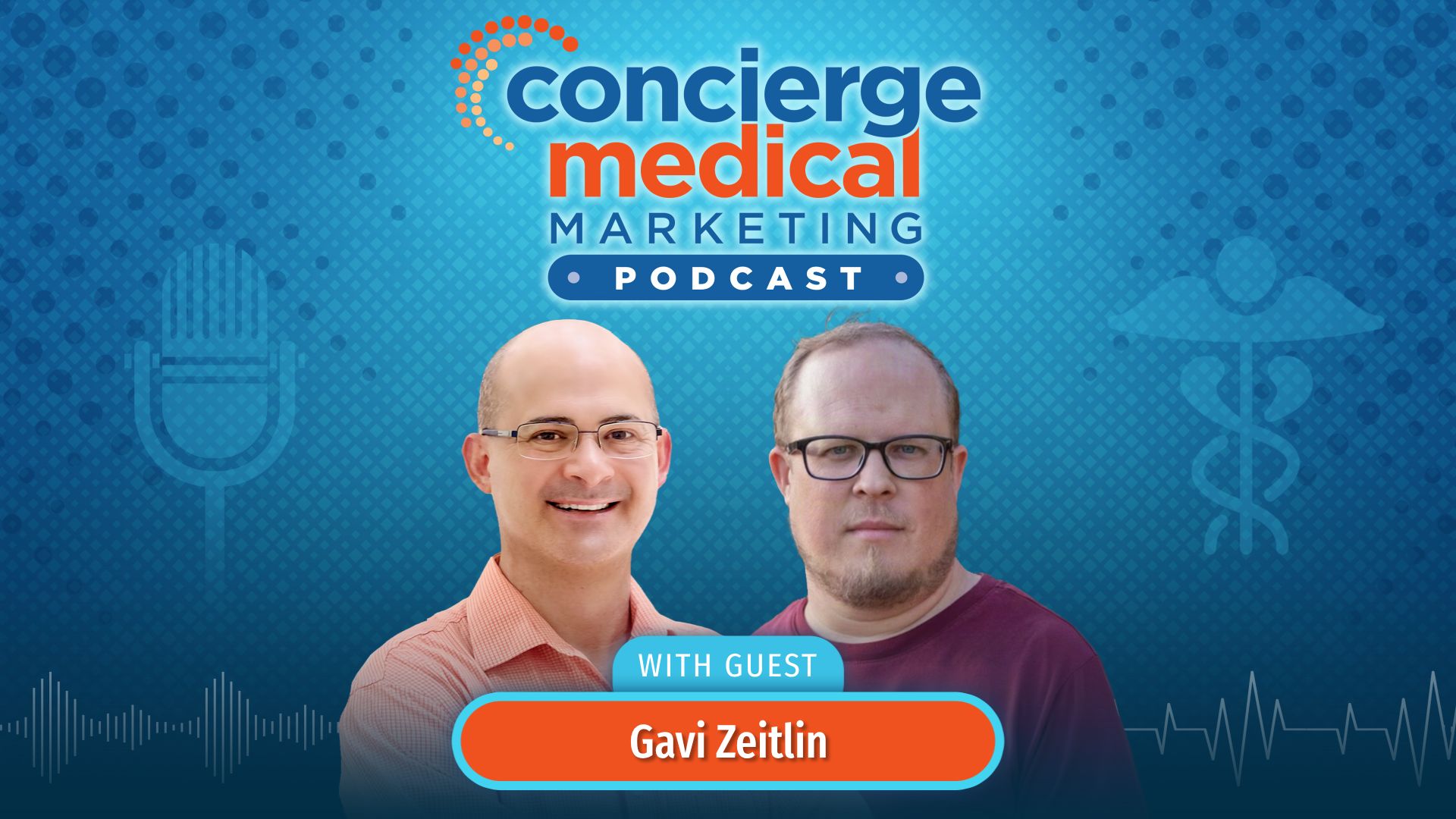
DPC patient conversion with marketing automation can dramatically boost your practice, potentially delivering 30% or more booked appointments from the leads you are already generating today. On the Concierge Medical Marketing Podcast, Gavi Zeitlin, CEO of Patient Conversion Engine, reveals how direct primary care and concierge medicine practices can leverage these automated systems for smarter patient acquisition. Gavi details why “speed to conversation” is more critical than “speed to lead,” explaining how automated, HIPAA-compliant SMS conversations can immediately qualify prospects 24/7, even after hours, without asking for symptoms. He also introduces his “Fire Offer” philosophy, showing how to uniquely package your services, like an “energy boost protocol,” to differentiate your membership practice and directly address patient pain points. Learn how to maximize your existing marketing efforts for dramatically higher DPC patient conversion.
Episode Chapters
00:24 Introduction to the Concierge Medical Marketing Podcast
01:21 Gavi’s Background and Entry into Direct Response Marketing
02:45 The Power of Back-End Optimization: An Early Success Story
05:14 Defining Front-End vs. Back-End Marketing
06:40 Optimizing the Back-End: Identifying Pain Points and Selling the Call
09:39 The Importance of Speed to Conversation for Lead Follow-Up
11:03 Automated Conversational AI via SMS for Lead Qualification
21:30 Best Practices for Consent and After-Hours Automation
27:57 The Fire Offer Formula: Packaging Services Uniquely
34:28 Gavi’s Patient Conversion Engine and Steven’s Marketing Resources
Connect with Our Guest
Full Episode Transcript
Hello and welcome to the Concierge Medical Marketing Podcast. I’m your host, Steven Schwartz, and it’s truly my pleasure to welcome Gavi Zeitlin from Patient Conversion Engine. Gavi, welcome to the podcast.
Gavi (00:37)
Welcome, Steven. Awesome to be here.
Steven Schwartz (00:40)
Wonderful. Thanks so much for taking the time. And just off camera, we had a a really great conversation. I’m like, man, I gotta hit the record button because so many great nuggets related to marketing of medical practices and the follow-up and the automations and so much really great stuff that medical practices can do with the technology to help them get so many more patients with even less ad spend and less money spent on technology. So without
without giving away all of your thunder that we’re gonna talk about today. Gavi, tell us a little bit about just your background quickly, you know, where you grew up and, you know, what got you into marketing and medical marketing. Just give us some background, please.
Gavi (01:21)
Yeah, sure. So I was saying before I was b I I was born in California. and when I was one my parents moved to Baltimore where I grew up throughout the the my childhood there. My business is based there. And in terms of kind of what got me into marketing, it’s actually really funny that I it was going back like I would say two thousand and six, I got a a letter in the mail from a company called AWAI about copywriting. It was the first time I’ve ever been introduced to something like this, and I just started to
get everything I could on this topic to learn about direct response marketing, going down the rabbit hole of Dan Kennedy and Gary Halbert and all the all the great direct response greats. and that eventually led me to kind of what is my my first role, which was the startup a startup in the in the very early fledgling electronic cigarette space in the early in the early days of the industry. And what was interesting about that is that while it’s very much a consumer-facing product, eventually I moved into the R D side of things.
And it’s actually a medical device. And it’s actually been regulated and it’s being developed as a medical device. So I start to see not just how do you start marketing these things online, but how do you also develop then products in a regulated space, in a regulated environment to meet certain certain requirements that are gonna be needed in that space. And at the time, you know, we were it this is the early days of the, you know, of of e commerce internet. and at the initially I was very much involved with doing that and building
up the growth of the website. And one of the things that we got hit with very early on was issues around particularly paid traffic because of the industry we were in. So we had to focus on how do we maximize our retention and focus on platforms that we could own. what kind of just a funny story that happened in there I remember at one point there was a a buddy of mine, we we had like a free week there was like the everyone was out of the was out of town for for something. So we’re like, hey listen, let’s focus on building a retention program.
And we set something up. It was an automated email system. This is back in like 2011. And and we set it up. And then everyone comes back and we’re back to storming away. You this is an early an early stage startup. And like six months later, he says to me, You know, that that campaign we set up six months ago, it’s generating an extra $750,000 in additional revenue.
Steven Schwartz (03:27)
Nice.
Gavi (03:28)
And that back then was like the point where I was like, whoa, like the everyone’s focusing on customer acquisition, the front end side of things. But it’s like, man, if you can optimize your back end.
Right. There’s so much opportunity in terms of what you can do. And that that was also just a great experience because like it allowed me to see things not just on the on the can you know the marketing side of things. I eventually became a pro a product manager over there, got into the product development side of things in the third year of me working there. We got purchased by a Fortune two hundred company, Altria.
and now I got a chance to see the other side of the of the corporate world and see how things did not move very fast and did not think very innovatively and trying to see how we can work within this system to be able to kind of move where the market was going. and to basically make a long story short, it was not moving fast enough. it were I would say they weren’t letting us move fast enough. It’s like they bought us that for because we were a company that can move fast, but
But they were holding our hand back along the way. And then the final year, what wound up happening was they ended up investing in the leader in the leading company in the market. I would say it’s one of the worst business investments in the world at a the thirty percent of a thirty six billion dollar valuation. Today it’s companies worth like I think seven hundred million. So he just gives you an example, but part of that was they cut our entire our entire team at that point. And that was a point I I wound up going on my own.
I’m basically launching my own marketing agency and and there were a few years I was I I t twice this happened. I had a client basically say, Hey, listen, you’re getting us such great results, we need to bring you on full time. So I would so I popped it in out of a few agencies as an employee during that time. and today what I do is I run essentially my it’s essentially my I have a couple bunch of clients and we’re basically running Facebook ads to funnels that we built out.
And one of the things and we’ll get into I guess where the patient conversion engine came from, but it kind of comes that from that philosophy of how do you optimize your back end of your marketing systems to maximize whatever you’re doing on the front end, to kind of le to make things as profitable as possible.
Steven Schwartz (05:34)
So before you go on, for folks who are listening to this and they hear like front end, back end optimization, it’s like, holy cow, I’m I’m already lost. Just give us a real basic let’s say, definition for somebody who doesn’t understand, you know, digital marketing. What’s the front end? What’s the back end? And what is optimizing your back end really mean?
Gavi (06:01)
Got it. Great question. So a lot of people when they look at marketing, they focus on what they can see when they’re scrolling their phone on on Facebook or they do a Google search and what you’re doing to get your marketing in that Google search for Google PPC or SEO or on a on a Facebook ad or ever other platform you’re trying to get your initial visibility in. That’s that would be is what the front end would be. How do I get attention in the marketplace to drive that initial click?
When I say back end, it really is everything that happens after that. Right. So it starts with what’s the experience someone cut gets to when they land on your landing page. But not only that, when they get to the point where they actually are gonna reach out and and and talk to you, how do you optimize that experience? Right. So I can give an example of this. One of the things we did with one of the one of the clients that I’m working with, it’s a hematology company based in New York City. And, you know
when we started working with them, they were doing primarily Google Ads, sending to you know what a lot of people do, it’s either they’ll send to their homepage or they’ll send to like kind of like a miniature landing page with like, hey, here are the services that we offer, book a consultation. That’s essentially what the pages will be. If they’re really sophisticated, they might add some social proof to that page. and what I I did when I do with really all the campaigns that I’ll do is is I’ll want to optimize two things. the first is how do I define
Whatever the pain point is that the customer or or I or person themselves is thinking in their head.
Steven Schwartz (07:25)
yes.
Gavi (07:26)
I my god, I have so many stories of it’s like of like, you know, people people in like the conversion optimization phase, and I’ll get to a minute into a minute what that is, they’ll get excited when they have like 10 to 15 percent increases in their conversion rate. Like, I’ll do campaigns where like there’ll be like 700 lifts in a week once you
Steven Schwartz (07:42)
Nice.
Gavi (07:42)
are able to really identify what that is.
and then the second one, which is really it’s connected to the first one, you have to get that first one down first, which is that whatever you get to your booking of a consultation, turn the call itself into an offer. Right? So it’s not just like because the mentality of somebody when they get to let’s say they get to your page, they read it, they’re like, Okay, maybe I should, maybe I shouldn’t. But if you instead lead into actually selling the call, listen, when you get on this call, it’s not just gonna be us checking out your options.
You’re gonna learn XYZ. You’re gonna solve this, you’re gonna get answers to this problem you might be experiencing, right? And in worst case, like you know, you’ll be able to either go with us or somebody else when you’re done, but at you’ll have clarity on what it is. And that’s one of the things that I’ll do with every client that I work with is start really at that point, identifying the pain point of the client, right, and articulating it as as strongly as you possibly can, and then leading that into what is the offer of the actual call, what whatever that action is they’re gonna take on your website. So when I say
optimizing your back end. That’s what I’m talking about. And then there’s a second component to that, which is after they sign up, what happens between that point until you get them into the chair. Right. So th so just to define front end and back end, that’s how I would define it. So I hope that’s clear.
Steven Schwartz (08:54)
Sure.
And I know that when I as a consumer am interested in something that’s pitched to me, maybe starting as a Facebook ad, scrolling through, I see, that looks interesting. I click, maybe there’s a little video, social proof, kind of item one, two, three pain points it’s trying to solve. I’m like, you know what? Hmm, I think I’d like to learn more about this. So I click the button and either give them my email address.
So or my cell phone number, my name, those items. And then after I hit that submit button, things happen. Do you want to talk about what some of those things can be and should be when it comes to marketing a concierge or direct primary care medical practice?
Gavi (09:39)
Yeah, sure. So that that actually that point is one of the most important points of the entire marketing process because you’ve got them to that point. You’ve got them to say, I’m interested, right? Which is one of the hardest things to do. Right. And then it’s what happens next that a lot of people like they even know what they have to do. And it’s still a struggle for them to do it. Right. Everyone will generally know that, you know, we have to, you know, speed the lead.
is the metric that they want to talk about. And I actually remember b back in the day when what it was one of the first times I ever marketed in the medical industry. It was a number of years ago. we were running ads for a plastic surgeon’s office and and we’re having the leads come in and and like man, like like only like twenty percent they could even get back on the phone afterwards. And I was talking to to the someone else who would who would run campaigns like this and she said to me, she said, I can tell you exactly why.
It’s like you you gotta get back to them in five minutes. Otherwise, like they’re gone. Forget about it. Right. And
Steven Schwartz (10:34)
Exactly.
Gavi (10:35)
and and and so like there’s kind of a few buckets of people. The the first one is like, okay, we’ll get back to them whenever we can. We got people who are like, they’ll have multiple jobs in the office and like, you know, maybe maybe they’ll sit down for an hour a day and call people back at some point if we’re lucky and realistically like people get people get lost on that list.
You get pushed off to next day. Speed delete is not is is a challenge. But the metric that I like to really think about is not necessarily speed to lead, but speed to conversation. And I’ll
Steven Schwartz (11:03)
yes.
Gavi (11:03)
explain what I mean by that in a moment because you know, one of the challenges you have when I say speed delete, which is like, hey, listen, let’s say it’s nine o’clock in the morning, you come in, you see you got a few leads that booked overnight, and and you get back to them. The problem is that they saw your ad and filled out your form at nine thirty while they were lying out and they’re lying down on their couch the night before.
So you’re actually calling them back 12 hours later, even though technically it’s fast because it’s, you know, it’s first thing in the morning. So one of the things that we built out with our clients, and that’s and that’s really what we’re now doing with the with the patient conversion engine, is actually building this specifically for any practice, which is to build a system that will automatically respond as soon as somebody fills out a lead form.
And not with like, hey, we got your information, like a generic test matches, we we’ll be in touch with you in the morning. Like w you know, one of the things you can have with the systems you have today is can actually start conversations with people and you can start qualifying them there on the spot. And I I see these threads. They’re like they’re like I I every time I see them, they’re amazing. People like will actually think they’re they think they’re talking to a real human, but it’s the system actually responding to them, right? Saying, you know, you’ve had these these issues in the past, how long have you had this? you know, what symptoms are you having? Well, actually qualify them.
Right. And and in often, depending on the setup of the individual individual practice, either we’ll just at the end of it give them a booking link, or it will say, Hey, listen, we need more information. Can can we call you back at nine o’clock in the morning, which is a different moment than like after we had a conversation for five minutes, right? Then everyone el then everyone else who I responded to who’s gonna all call me back at nine o’clock tomorrow morning. Right. I I know who you are now. and in some cases also directly even book them directly in.
to to your appointment settings. so it’s really sure.
Steven Schwartz (12:43)
Okay, so let me let me let me interrupt here. you
talk about having this conversation. Are we talking about a text message conversation, emails or voice, like an AI voice? What is that conversation technology?
Gavi (12:58)
Right. So depends on on what platform they’re they’re they’re at. We actually primarily do SMS. we primarily do SMS. You you can do the, you know, the you have the technology now for people to do actually voice on a website. The issue that what I see right now is that it is that it’s not necessarily this it’s it’s not the right platform that people are natively talking to. Right. Maybe you and I are talking on the computer right now, but people don’t go to websites and be like, I’m gonna start talking with like a chat agent on a website.
Right. That’s not something normal. But if someone starts texting you, that’s a normal mode of of of communication that I’ll have. And one of the this also ties into something interesting at as well when it comes to building out products, which is that one of the most important things when it comes to building out product is aligning your product with the existing behavior people are already doing. Right. Once you start having people need to change behavior, it gets a lot harder for people to interact with your product. So because
Steven Schwartz (13:48)
That hurts your conversion.
Gavi (13:50)
Right. So because so so text messages is the is one of the best ways to do it ’cause people are naturally doing that all day anyways, and it’s a normal way for them to communicate.
Steven Schwartz (13:58)
Great. And one other question came up. You had asked, you know, what are your symptoms? I’m always hyper vigilant and super careful when we’re dealing with you know, potential HIPAA violations and and private health information going across the wires. what are your thoughts on how technology with SMS and this automation can also protect our medical clients legally related to HIPAA?
Gavi (14:25)
That’s a d that’s a really good question. So I actually I did miss I did misspeak. That’s one of the things actually we’re very careful about is not to actually ask for symptoms. If there’s symptoms on the website or they prompt and say, Hey, I’m having XYZ, the system like great, that sounds like something that potentially you might want to book an appointment for to get checked out, but it won’t start it won’t diagnose. That’s the mo that’s super important to include here. This is a marketing qualification process. It is not a a diagnosis tool whatsoever.
Steven Schwartz (14:53)
Right, exactly. Good. Yeah, just to make sure on that, because when you said that, I’m like, I’m not sure if he actually meant to say that, but yeah, good, good. Yeah, with
Gavi (14:58)
Right, no, I I miss I misspoke.
Steven Schwartz (15:02)
we you know, unfortunately our our wonderful United States of America is a great country.
Gavi (15:07)
Mm-hmm.
Steven Schwartz (15:08)
We love it, but man, people like suing people over stuff, and we gotta be super careful on things like that. so
Gavi (15:14)
Right. Hundred percent.
Steven Schwartz (15:15)
so I understand the flow that you help.
with the Facebook and Instagram ads, generally known as you know meta ads. once the ads are out there, there’s an ad spend that the clinic pays to distribute and display those those ads to people who are in the right general target for the medical practice. we call these folks in in under my vernacular, we call them passive prospects. People are maybe live in the right area, have the right income,
the correct age, male, female, or either, those kind of things, display the ads to those people in your right demographic lots of times. Obviously the the the graphic or the video, the hook, the message, all these things have to be done to make sure that the person who sees them will stop, right? Always talk about scroll stopping to stop,
Gavi (16:09)
No.
Steven Schwartz (16:10)
look at the thing and say, hmm, you know what? I do want to learn more about this. So they click.
They read maybe at a landing page, also known as a funnel or the top of the funnel, where they start looking through that information, maybe watch a video, see social proof, you know, the five-star review examples, and these are the things that we can help solve. Would you like for information? Would you like to join our list? Would you like to schedule a call? That’s the call to action that that we we talk about in marketing. Someone fills out the form, clicks the submit button.
Then the back end automations happen and you talk mostly about text message conversations that go back and forth with the person. 9 30 PM, they’re sitting on the couch, they think they’re talking to a real person. Sometimes they realize they’re talking to an AI, but it still works. They’re able to share their enough of their their information so that they can be qualified or not, led to set up an appointment or not. Can we call you back at nine in the morning? I love that flow.
Based on that, is there anything that I missed in recapping what you’ve told us?
Gavi (17:15)
No the the no the thing that the recap is good, but one point also I’ll just flesh out there, I think it’s important to understand, it’s because it’s also it’s not people people might hear, like it’s text messages. Think about the psychology of it. So somebody sees an ad, it could be, I don’t know, let’s say the issue is I I again, I I work with hematology right now. So so one of the issues that people will have is have very low, low energy, particularly women who may have heavy periods or they’re just feeling drained all the time and they’re told, like,
You know, it’s just hormones or or it’s iron, but like the just take these pills, right? And really what they need is they need to have a more thorough blood ex blood work done and then they need an iron fusion. and they need a protocol to do that. So someone sitting on their couch at night, you know, seeing this ad, I’m like, my gosh, this might be the solution to my problem. Right? They go in, they put their information in, and then they click submit, and then they wait.
And one of two things is either gonna happen. Like we got them that moment, we’ve got some agitation where it’s front of mind. And how many how many of us have had leads come in from these programs? We call them back the next day, and like, I don’t remember filling out that out. Right?
Steven Schwartz (18:21)
Absolutely. Yep.
Gavi (18:23)
Right. And and and this helps solve that gap, which is right away a hey, like, hey, you fill this out, you know. we’ll just want to make sure we got this information correct, you know. yes, XYZ, right? You know, hey, you know, like we have some appointments later this week, you know, is that something you’d be able to
you might be interested in booking with your with your with your calendar, et cetera, et cetera. And then again, you’re engaging them in that process for them to just again continue that conversation forward. The point is that they put the message out, speed the conversation it was is within 60 seconds, which separates you out from literally everyone else who’s maybe they’re sending them a text like a random text message or maybe they’ll send them a random email or they’re calling them back the next day if they’re calling them back at all.
Steven Schwartz (19:03)
So here’s one I just gotta share with you. a couple of weeks ago I saw an ad somewhere talking about saving money on your auto insurance, I think it was. And I’m like, you know what? I haven’t priced out my auto insurance in a while. I mean, I’ve been generally happy with what we have and you know, I guess it’s okay. Thankfully we haven’t need to use it. But all right, whatever. So I put in my you know, my name and my cell phone number into a form somewhere and hit the say submit button.
And literally in under one second, my phone was ringing with somebody saying, Hey, is this Mr. Steven Schwartz looking for some you know quote on your auto insurance? I mean, literally the phone rang within one second. And that’s truly that speed to conversation that can help differentiate a business following up.
quickly on a hot lead versus waiting the 12 hours to the next morning and the person doesn’t even remember they filled out the form. so that that’s the kind of stuff that we’re talking about. obviously getting a call that quickly was a bit obnoxious too. So you have to keep that in mind that not everybody on the receiving side likes that. But a text message, you know, you can ignore a text message or you can interact with it. And so that definitely can help move the process along
when we do automations like this in concierge medical marketing, when someone fills out the form, we typically trigger an email to them at the email address supplied by the person filling out the form. We then wait about a minute and then we send a text message to that person saying, Hi, this is Steve at Concierge Medical Marketing. And by the way, I just sent you an email. Did you receive it? Be sure to check your spam or junk folder.
And you know, whitelist it. Why do we do that? Because we want to make sure that they get the email. And if they didn’t, you know, if it’s in a spam folder or whatever, because that does happen sometimes, the text message follows up and on its own, it’s like starting that dialogue and it encourages them to go check the email where there might be more you know information they can look at on a large screen or their smartphone. So those and also we do a voicemail drop. So about five minutes later.
I have a pre-recorded voicemail message saying, you know, hey, this is Steve. Thanks for filling out the form and like to you know look into it more detail and I can’t wait to speak with you or something along that line. So no matter who fills out the form, they get the same voicemail message that drops straight into their voicemail on their phone, and I believe without even ringing it. So that’s kind of a cool thing to do. just say, maybe one thing you can talk about is the importance of
The person filling out the form to click a box giving permission to be marketed to with follow-up.
Gavi (21:48)
Mm-hmm. Yeah. So well I’ll I’ll just also one other point in terms of what you said, like that’s a great system. but I’ll also mention another benefit as well is that is that you can do you you can maximize everything after hours as well. Right. Which is also a super, super important component of this. It’s like people are people are busy and they’re looking at their phones at night. And that’s when a lot of these things come in, right? And instead of having to wait the following day, it’s just a way to not lose that opportunity.
so yeah, and in terms of what you’re saying, in terms of the in terms of the consent, you know, that there’s it’s very important to ask for consent when people are getting back to you. I I would say it sometimes might be a little different if they’re directly saying, Hey, listen, I want you to call me, like that’s why they’re reaching out to you. as opposed to let’s say like a lot of times people will say, download this free ebook or training or whatever it is. Like in that case, like, okay, I’m agreeing to the to the training, but I’m not agreeing for you to
message me afterwards. Here it’s like we’re actually saying, give me a call. So I would say in this one, may maybe a little bit of a gray area, unless there’s obviously rules or regulations which you should follow. but say in this case if they’re actually reaching out saying I want you to call me, right, it does add a little bit of a friction. but it depends on a case by case basis, I would say.
Steven Schwartz (22:55)
Right. I think
for me, my recommendation is to err on the side of caution and just have the little checkbox under the form. First name, last name, email address, phone number, check box saying, May I, you know, do we have your permission to contact you by any means? You know, and typically people will click that. because again, we don’t want to annoy people, and we certainly don’t want to put ourselves and our businesses in a
A dangerous place legally in case somebody says, Well, I never clicked the button that you could contact me and you sent me a text message. So now I’m gonna sue you or whatever, something stupid like that. But again, people do these things. So just you know, err on the side of caution. I do love your comment about maximizing well, strike while the iron’s hot, right? If someone’s filling out the form at 9 30 or 10 30 or 11 30 at night, and the automation will start communicating with them.
great. And that’s gonna help that stick in their mind. So when they say, Yeah, I’d like to have a a call at nine thirty in the morning, they have some hopefully some memory of the fact that they chatted with someone for twenty minutes that evening before. So very powerful.
Gavi (24:04)
Yeah, for sure. And I think also to to your point also about the the consent is you know I do agree with you because I’ll I’ll tell you an interesting story. you actually might find this interesting in terms of what you do, s is that I I showed this one time to somebody who’s worked in PPC for twenty, twenty five years. And I and I’ll very time very often on my sign up form ask anywhere from four, five, six, seven qualifying questions. And he looked at he’ll he looked at it and he’s like, Why are you asking like every question like
Common sense, it’s causing friction. You’re gonna lose people. I said, this page is converting at twenty percent. And the reason why it’s converting at twenty percent is because I led them in the right with the with the right pain, right? I got all the right notes of exactly what their situations are agitated that about getting them to take action on a solution. I explained where the offer is gonna be, right? So much so when they click the book now button, they’re in there’s so much.
urgency to book. They’ll go through these questions. It’s a great qualifying point as well. And the truth is what you’re saying about the consent, if you ask add a consent button, I think at that point, I honestly wouldn’t make a difference. I never actually tested it now now that you’re bringing it up, but like it’s like I don’t see why it would cause a problem. And you’re right, to protect yourself legally, 100% you just you should have it in place.
Steven Schwartz (25:19)
Right. one of the types of marketing that’s become much more popular over the last couple of years is literally the survey that someone types in, like, well, what is your pain point? And you choose from one of three boxes and you just touch it, and then it says, Okay, well, based on that, what about these three things? And they that one, and then what about such and such? Click. And you literally you don’t even have to type anything in, it’s just touching it on your phone.
And then at the end of that, it says, okay, we understand that you’re a this with this problem, with this history and this challenge. And because of that, we believe we can help you. if you’d like us to to schedule a time to talk it over and us to explain how we can help you solve this thing within seven days or whatever, click here,
Gavi (26:04)
Mm-hmm.
Steven Schwartz (26:05)
provide us your your name, email, phone number, and
We’ll do that. And what’s nice about those forms, as long as the the questionnaire doesn’t get too long to therefore become annoying, the the the prospect starts to think about it’s like, wow, they’re really asking me questions and they seem to really understand me and my problem. And be based on that, they seem to be able to offer me a solution. Yes, I want to know what that solution is on a no obligation consultation call, as we talked about early earlier here today. So
Gavi (26:36)
Well, see that I give you example of this.
Steven Schwartz (26:37)
That’s become super popular.
Gavi (26:38)
I can give you an ex- I can give you a good example of this, I think, for the audience, which is that, you know, imagine you walk in to see a doctor. And if you walk in to see the doctor and he right away and you tell him, my leg’s hurting, he’s like, okay, great. Here’s some pills you should take. Like, hold on a second. Right? You know, like like like where
Steven Schwartz (26:52)
Yeah. Time out. Time out.
Gavi (26:54)
but you don’t want to hear like where did it happen? Like, like where in the leg is it hurting? Like if he starts asking like like you know, okay, so when
Steven Schwartz (27:01)
Qualifying questions.
Gavi (27:02)
did when did it start when did it start hurting, right? Where is it hurting?
Is it hurt all the time? He’ll ask qualifying questions. Right. So the point is that when he eventually gets to the diagnosis at the end, it’s actually those questions that provide the comfort that, okay, this is the right person to help treat me. Right. And it’s the same exact thing when it comes to marketing.
Steven Schwartz (27:20)
Yes. And also in in the the real world example is my doctor is listening to me. The doctor is hearing me. They’re not just thinking what the next question is, but they’re listening, they’re they’re ingesting the information that I’m sharing. They’re asking smart questions because I know they care about me and my health, and they want to know these answers to get me the best solution to solve my problem as quickly as possible. For medical.
For marketing, it’s the same concept.
Gavi (27:51)
Right. It’s all it all comes down to listening and does a person feel like they’re being heard.
Steven Schwartz (27:57)
I I love this discussion here, Gavi tell me about your fire offer formula. What is that? Why is it important for concierge and direct primary care practices to have their own fire offer?
Gavi (28:10)
Yeah. So it’s interesting. Fire offers is something I’ve I’ve I I’ve evolved already from a few years ago. That was something I used to position a while back. there’s a whole acronym I I built out for it. But but but when it comes to but but the point winds up being is a lot of people will think like, we have to change something in our marketing. So they’ll think, we need new ad platform, we need new ads, we need a new whatever, right? The front end like we talked about earlier. and they don’t realize what really what we need to do is we need to change our offer.
And what is an offer in this case, just to understand what it means, is that a lot of people, depending on whatever it is that they’re they’re offering, they’re in their market, everyone sounds the same. Like once you get to someone to that point where it’s like, you know, again, I’ll use hematology as an example. Like, you know, you come in and we do your blood work, and you know, we have a a a seven day process, and then you come in for your transfusions and this, and everyone sounds exactly the same.
And what it what an offer means is that I’m I and and it can you can do this for anyone, which is that how can I take what I’m doing already and package it into something that is going to sound unique and is also very important, directly connected to the problem that we brought the person in with to begin with. So I’ll give you an example again from from the hematology company is that what we ended up building out was a
their program we call the energy boost protocol. And we built out, you know, like the protocol, it’s built on these three pillars, right? Again, all directly tied back exactly to the pain points that we’re bringing them in on the marketing standpoint. And when someone goes through that whole process, they see their ad, you know, that’s saying, Hey, do you this problem? Like, yeah, I have that problem. Right. You know, it’s like, can you help solve it? Right? You come in and they read your landing page, they watch your video, they they’re like, You I I think these guys can help me. And then they get out of the offer. It’s like
Book of Freeze Consultation, like I don’t want to get sold to. As opposed to as opposed to and I’ll I’ll also add one component as well. There’s the actual offer you’re going to offer at the end of the process, there’s also the marketing offer, which is that when you get to that landing page, turn your call, that call into an offer, right? So right away you could address the objections right off the bat. I know that one of the things that I I work with rheumatology companies in the past, and in their market, people are extremely skeptical of getting sold to, right? So
what you tell them is before they even come, like, hey, we’re gonna come and you brand the clarity call. It’s just to get clarity about how to solve your problem. There’s gonna be no pressure. There’s gonna be you can the point is you come in and you will walk out not being concerned anymore about whatever it is that you’re concerned about right now and you’ll know exactly what you need to do. Right. And there’s no obligation. and that’s what I mean when it comes to an offer. So there’s the marketing offer that comes what on the marketing process
And then when it comes to actually then having people come into your practice, there’s the actual service offer that you’re gonna have as well. So that’s when it comes to when I say offer, that’s what I’m talking about, right? Which is a way that how when we actually do all the work of bringing everyone through the process, how can we not sell everybody else and position what we’re giving to people as something that’s exciting and directly related to whatever it is that they’re experiencing, the pain point that they’re solving that that that they’re experiencing and
and align it with with our service. So they’re yeah, this is this is the right one for me.
Steven Schwartz (31:24)
Exactly.
you made me think of a digital marketing god, Alex Hormozi who’s written three amazing books on
Gavi (31:32)
Mm-hmm.
Steven Schwartz (31:33)
on this topic. And the idea is that you don’t want to say that I sell ABC services along with a gazillion other count companies and practices in this area, but instead you offer something that’s you know a unicorn, something like it’s either
Take it or leave it, but it’s not the same thing that you can get a hundred different places, right? And there’s something that Alex Hormozi talks about called the value stack. that if you sign up with us, you pay or invest X dollars now, X dollars as we go on, or whatever that price model is, but you get A, B, C, D, E, F, G plus bonus things, H I J K L or whatever. And so they understand it’s like.
You can’t just go out to some other business and say, I want what they offer, I just want it for less price at better sort, you know. You you have to take it or leave it. And so
Gavi (32:24)
Right, most people
most people try to compete on features and price. And that’s just a race to the bottom. by the way, you
Steven Schwartz (32:28)
Yes. Exactly.
Gavi (32:30)
mentioned Alex Hormozi. You know where Alex Hormozi learned all of his stuff from?
Steven Schwartz (32:33)
Where did we learn it?
Gavi (32:35)
All the people I mentioned at the beginning of this podcast from the direct response world, Dan Kennedy, Gary Halbert, Eugene Schwartz, right? All these people, but he packaged it for the internet age today. And what’s interesting is that the person who did it kind of the decade before him pretty successfully was Russell Brunson.
Steven Schwartz (32:51)
yeah.
Gavi (32:51)
as well from click funnels. So Alex Hormozi, I think, is he took it he Russell Brunson did it in terms of his building up the you know, because he was building ClickFunnels to to this tell people how to sell online. Alex Hormozi took it to a whole new level about how to use social media and how to build actually the business components of everything as well. But it all comes back to that root, right? Of just the classic direct response people from, you know, fifty years ago.
same ideas, the same principles, then how do you bring them into twenty twenty six and beyond? The platforms change, but if you understand the principles, you can apply it to any adapting technology or platform or marketing whatever that is the is being used today.
Steven Schwartz (33:33)
Gavi, this has been great. I’ve really enjoyed our conversation. And you bring a wealth of knowledge and experience to the space. And, you know, the process of once people click on your ad, click on your landing page, what happens and how to do that right so that you get dramatically more conversions, dramatically more people signing up and actually showing up for their consultations. And obviously in the
Concierge and DPC space, we call it meet and greet appointments to get people to actually show up in person or virtually to meet with the provider, chit-chat, get get acquainted, and see do I want to sign up with this membership practice or not? And if somebody wants to speak with you about implementing these techniques and methodology and technology into their medical practice, how can they best get in touch with you?
Gavi (34:28)
Yeah, sure. So the two best ways to get in touch with me, just in general, you can connect with me on LinkedIn. I’m pretty I’m pretty active there. Steve, I believe there’ll be a link in the show notes, but you can also just look up my name in the search. I th I there there are as far as I know, no other Gavi Zeitlin on LinkedIn.
Steven Schwartz (34:43)
Very unique name.
Gavi (34:44)
yeah, thank you. and and we can connect over there. But if also you’re specifically looking for something, just more a little more package that can you can plug into your existing
s marketing stack to start getting these types of results. So we built out right now the patient conversion engine. And depending obviously it’s gonna be dependent on the service itself. But you can go to www.patientconversionengine.com and you can sign up for a call with me directly where we’ll do a patient revenue audit on your business to see where potentially things are being lost right now in your current marketing stack and how you can potentially start to get up to 30 or maybe percent or more booked appointments
from the leads that you’re already generating today. a third thing place you can also go to get some information is I have a training also on patientconversionengine.com/optin where I go into a training on how you can do the same thing as well. So if you’re ready to jump in, book a call with me on that. If you want to talk about general consulting, then the best way to do it is to connect me over on LinkedIn. We can take things from there.
Steven Schwartz (35:41)
Yeah, very, very cool. now through my primary business, Concierge Medical Marketing, we have a growth program that we focus on for the practices that literally need more phone calls, more clicks, more attention to their practice at the front end. And we do this through a three-step approach. Number one is related to your Google business profile. We either set it up if it doesn’t exist, or in most cases it does exist. We get access to it, we optimize it to its fullest potential for accuracy.
and completeness and then we syndicate it throughout the internet to over 500 different places. That way Google feels much more confident in who your practice is, what do you offer, where you locate it, what’s your phone number, and all that stuff. So you get higher rankings in the Google Map Pack, which is super important. Number two is Google Ads. Still, millions and millions and millions of people click on Google Ads every single day for the products or services that they’re looking for.
And we have figured out how to do this in such a great way to help dramatically lower the price per click that over what Google says you have to pay, much, much less, and get the ads to display in front of the eyeballs of people who are actively searching for the service. For example, best concierge practice in Des Moines, something like that, versus what’s the difference between Mounjaro and Ozempic, right?
not necessarily looking for a concierge practice. So we want to be really sure that we put our ads in front of the right eyeballs. And then third and final, very strong search engine optimization. The idea where you do a a per a patient does a search for any one of hundreds or eventually thousands of phrases related to a concierge or direct primary care practice. We want our client’s practice to be listed there. So we do a whole effort of figuring out what are people searching for in that area.
And then create content on their website that answers those questions and directs people to obviously schedule a meet and greet appointment. So that’s what we offer under our growth program here at Concierge Medical Marketing. All of this information is listed in a book that I wrote. It’s called The Definitive Guide to Winning with Digital Marketing for Concierge Medical Practices. It is available for free as a downloadable PDF from our website, conciergemd.marketing. Please utilize it.
Download it with my my compliments, please do. one thing you’ll notice is when you fill out forms on my website, automation in the back end, like like Gavi had talked about today, is going to fire off with you know messages, some emails, some text messages, voicemail. Those different automations that we talked about today, I obviously implement in my agency to help communicate with my prospects. So you’ll see how that works from that point of view.
I’ve also created a separate website called stevenschwartz.info that has tons of free resources available to the concierge in DPC space, AI tools that I’ve created, links to our podcast and blogs and free AI tools and reports, all this cool stuff. So please, stevenschwartz.info, feel free to visit there and download what you would like at your convenience. Gavi, any final questions, thoughts, or comments before we wrap this up today?
Gavi (38:59)
Yeah, no, listen, I I I I love hearing you talking about Google and SEO because i the the one of the benefits of us marketers is that all the different platforms have different desires. The platforms themselves have desires. And understanding what the platform wants is also kind of where I think where we’re able to really kind of provide that value. Right. So, you know what you’re doing with Google, you know, it’s like I I haven’t been in the Google space in very long time, right? So I’ve been mainly mainly on Facebook and and Meta and kind of quest things over there.
But that’s really what the value is, right? Is being able to have that experience to be like, how do we give them what they want, but then align it so that we get the outcome that we want with our with our marketing and what we’re doing over there.
Steven Schwartz (39:37)
I love it, love it. Well, again, this has been the Concierge Medical Marketing Podcast, my guest Gavi Zeitlin from patientconversionengine.com. And if someone wants to meet with me personally to discuss digital marketing strategy, goals, problems, challenges, whatever, just visit cmmkg.com/schedule, and that’ll go right on my calendar.
folks, this has been a pleasure. Gavi, thank you again for your time and we will see you on our next episode. Please like, share, subscribe, all that stuff at the typical podcast places to help us get this message out to as many people as possible. God bless. Have a great day.
All right.
Gavi (40:16)
Right.